Seasonal Grooming Changes: How to Support Your Cat's Coat Year-Round
GROOMING
Feline Insight
2/5/20265 min read
If you’ve ever felt like your home suddenly grew a second carpet made entirely of cat hair, you’re not imagining things. Many cats go through predictable coat changes as the seasons shift — and understanding these transitions can make a huge difference in your cat’s comfort, health, and grooming needs.
While cats are excellent self-groomers, seasonal shedding often requires a little extra help from their humans. With the right approach, you can minimize loose fur, prevent painful mats, and keep your cat feeling their best no matter the time of year.
Let’s break down what actually happens to your cat’s coat throughout the seasons — and what you should be doing about it.
Why Cats Shed Seasonally
At a biological level, shedding is driven primarily by changes in daylight, not temperature. As days grow longer or shorter, your cat’s body responds by adjusting hair growth cycles.
Outdoor cats experience the most dramatic changes:
Spring: shedding the dense winter undercoat
Fall: growing thicker insulation for colder weather
Indoor cats may shed more consistently because artificial lighting and climate control blur these natural signals — but many still experience noticeable spikes in shedding during seasonal transitions.
I remember the first time my cat went through a major spring shed. I brushed him in the morning and thought I had gotten most of it — then brushed him again that evening and somehow produced another full handful of fur. It felt endless, but it was completely normal.
Spring: The “Fur Explosion” Season
For many owners, spring is the most surprising grooming season. As your cat drops their winter coat, loose hair can accumulate quickly.
What’s happening biologically?
Your cat is removing the thick insulating layer that kept them warm during colder months. If that hair isn’t brushed out, it often ends up:
On your furniture
In hairballs
Tangled into mats
Floating across floors
How to adjust your routine:
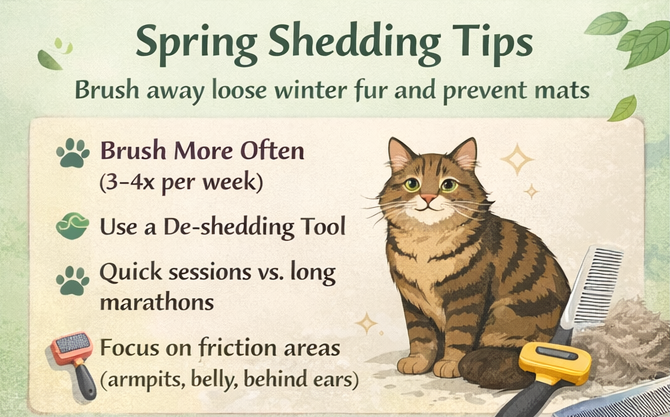
Increase brushing frequency (often several times per week)
Check out our more in depth grooming guideFocus on the undercoat
Check friction areas like armpits and behind the ears
Vacuum more often — consider it part of the process
Helpful tip: Short daily brushing sessions are usually better tolerated than long ones once a week.
One spring, I ignored the early signs of shedding and figured I’d “deal with it later.” Later turned into stubborn tangles that took multiple grooming sessions to fix. Since then, I treat the first signs of extra fur as my cue to step up brushing immediately.
Summer: Low Maintenance — But Stay Observant
Once the heavy shed passes, many cats enter a relatively stable coat period.
This doesn’t mean grooming should stop — it just becomes less intensive.
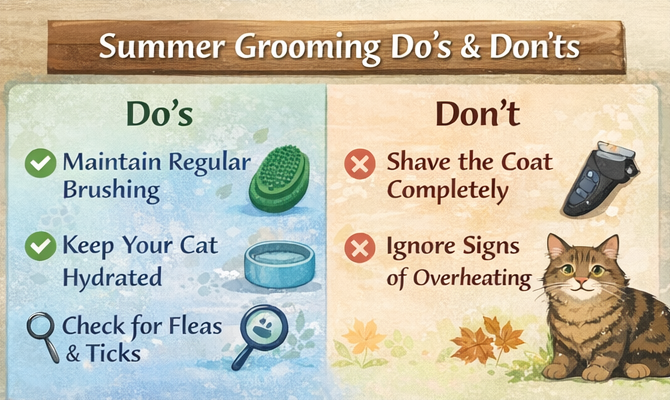
Watch for overheating
A well-maintained coat actually helps regulate body temperature by allowing air circulation near the skin. Severely matted fur, on the other hand, traps heat.
Contrary to popular belief:
👉 Most cats should NOT be shaved unless advised by a veterinarian.
Shaving can interfere with natural temperature control and may expose sensitive skin to sunburn.
Summer grooming priorities:
Maintain a consistent brushing schedule
Check for parasites if your cat spends time outdoors
Monitor hydration and skin condition
Think of summer grooming as maintenance mode rather than damage control.
Fall: The Coat Comeback
As daylight shortens, your cat begins preparing for cooler months by growing a thicker coat.
This transition is often less dramatic than spring but equally important.
New hair pushes out older strands, which means you may see another uptick in shedding — just usually not as intense.
What owners often miss:
Early matting can form as the coat thickens.
Stay proactive by:
Brushing regularly
Using a comb to reach deeper layers
Checking the belly and hind legs
Fall is also a great time to evaluate your grooming tools. If brushing feels ineffective, your cat’s coat may simply have become denser.
Winter: Less Shedding, More Coat Care
Winter often brings the appearance of reduced shedding, but grooming is still essential.
Dry indoor air from heating systems can lead to:
Flaky skin
Static-prone fur
Brittleness
Support skin health by:
Keeping your cat well hydrated
Maintaining balanced nutrition
Brushing to distribute natural oils
My absolute favorite way to trick my cats into staying hydrated is mixing one of these Churu treats with some water in a bowl. They will drink more water than they would have for the whole day in just one session.
Many owners brush less in winter — but this is exactly when coats benefit from gentle maintenance.
I once assumed my cat didn’t need brushing in January because I saw less loose fur. A few weeks later, I discovered small knots forming along his lower back. Lesson learned: reduced shedding doesn’t equal zero grooming.
Indoor vs Outdoor Cats: Do Seasons Matter?
Yes — but differently.
Outdoor cats:
Experience strong biological shedding cycles.
Indoor cats:
Often shed more evenly throughout the year, though subtle seasonal waves still occur.
If your indoor cat seems to shed constantly, it’s not unusual. Modern lighting can trick the body into staying in a semi-permanent shedding phase.
Consistency becomes more important than seasonality.
Nutrition’s Role in Seasonal Coat Health
A resilient coat starts with proper nutrition.
Cats require:
High-quality protein
Essential fatty acids
Adequate vitamins
If your cat’s coat looks dull or excessive shedding seems abnormal, diet is worth examining.
Many owners notice improvements in softness and shine after upgrading food quality — sometimes within a single shedding cycle.
When Shedding Is NOT Normal
While seasonal shedding is expected, some changes deserve attention.
Contact your veterinarian if you notice:
Bald patches
Sudden heavy hair loss
Red or inflamed skin
Excessive scratching
Behavioral changes
Trust your instincts — you know what’s typical for your cat.
Creating a Seasonal Grooming Strategy
Instead of reacting to fur overload, aim to anticipate it.
A simple framework:
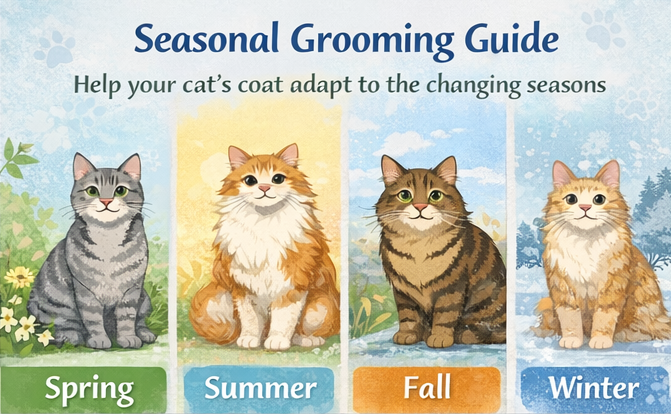
Spring: Increase brushing significantly
Summer: Maintain consistency
Fall: Prevent thick-coat tangles
Winter: Support skin and oil distribution
When grooming becomes part of your rhythm, seasonal transitions feel far less overwhelming.
The Emotional Benefit Most Owners Don’t Expect
Here’s something rarely talked about: seasonal grooming can deepen your relationship with your cat.
Brushing sessions create predictable moments of calm connection. Over time, many cats begin to seek them out — especially when grooming is gentle and never forced.
What starts as a practical task often becomes a quiet bonding ritual.
Final Thoughts
Seasonal coat changes are a normal, healthy part of your cat’s biology — not a nuisance to battle, but a cycle to support.
With a proactive grooming routine, the right tools, and a bit of awareness, you can:
Reduce shedding chaos
Prevent painful mats
Improve skin health
Keep your cat comfortable year-round
And perhaps best of all, you’ll spend a little more time in those peaceful moments every cat owner comes to treasure — a brush in hand, a relaxed cat nearby, and the reassuring knowledge that you’re helping them thrive.