Complete Guide to Cat Coat Types and Care
GROOMING
Feline Insight
2/5/20266 min read
A cat’s coat does far more than make them soft and beautiful — it is a direct reflection of their health, comfort, and environment. Understanding your cat’s coat type is one of the most important (and often overlooked) aspects of responsible ownership. When you know what your cat’s fur needs, grooming becomes easier, shedding becomes more manageable, and potential health issues are easier to spot early.
Whether you share your home with a sleek short-haired companion or a cloud-like longhair, this guide will walk you through everything you need to know to keep your cat’s coat healthy and thriving.
Why Coat Care Matters More Than Many Owners Realize
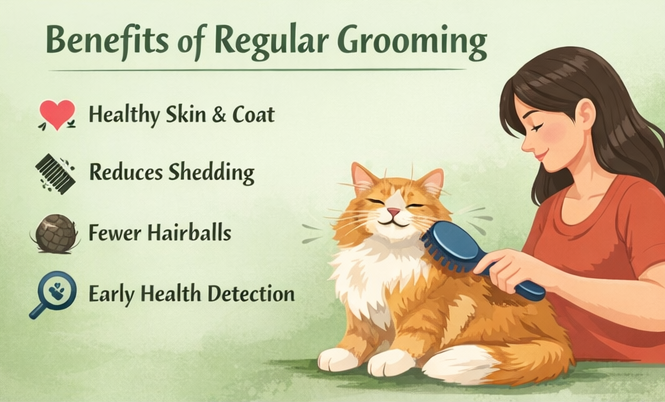
Cats are excellent self-groomers, but they aren’t maintenance-free. Grooming supports:
Skin health
Temperature regulation
Parasite detection
Reduced hairballs
Comfort and mobility
The Cornell Feline Health Center notes that regular grooming helps remove loose hair, dirt, and debris while allowing owners to check for abnormalities such as lumps, bumps, or skin irritation — issues that are much easier to address when caught early.
Think of grooming as preventative care rather than cosmetic upkeep.
I learned this lesson with my own cat, Jasper. For years, his coat looked great with minimal effort — until one winter when I noticed small clumps forming near his hind legs. What started as “just a few tangles” quickly became stubborn mats that required careful brushing over several days. Since then, coat care has been part of our routine, not an afterthought.
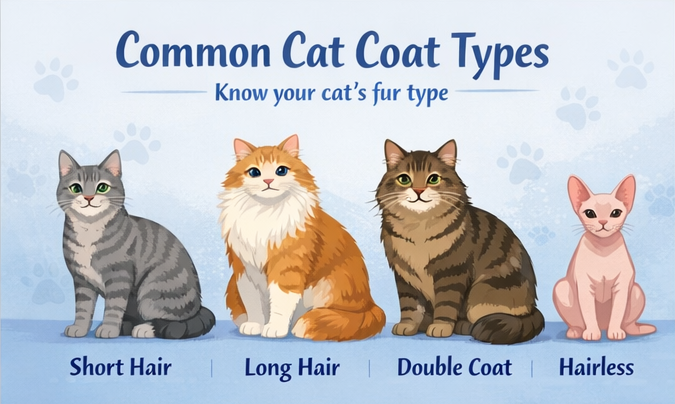
The Four Primary Cat Coat Types
While breeds vary widely, most cats fall into one of four coat categories. Identifying your cat’s type helps you choose the right grooming tools and schedule.
1. Short-Haired Cats
Examples: Domestic Shorthair, Siamese, Bengal
Short coats are the most common and typically the easiest to maintain. Their fur lies close to the body and sheds gradually rather than dramatically.
Care needs:
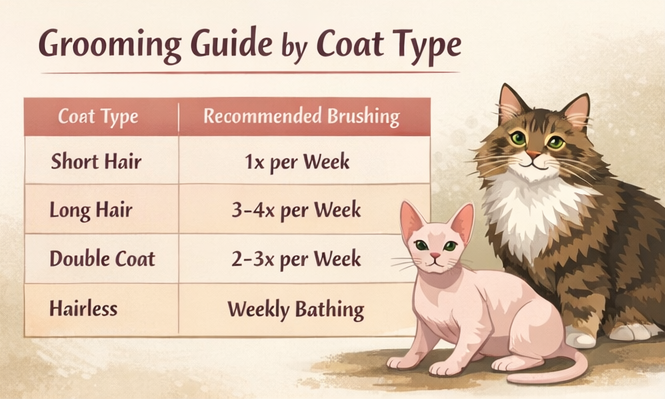
Brush once per week
Increase brushing during seasonal shedding
Watch for dandruff or excessive hair loss
Many owners assume short-haired cats don’t need brushing — but removing loose hair reduces the amount they ingest while grooming, which can help minimize hairballs.
2. Long-Haired Cats
Examples: Maine Coon, Persian, Ragdoll
Long-haired cats are stunning, but their coats require commitment. Without regular grooming, their soft fur can twist into painful mats that pull at the skin.
According to veterinary guidance, mats can trap moisture and irritate the skin, potentially leading to infections if ignored.
Care needs:
Brush at least 3–4 times per week
Check friction areas (behind ears, armpits, belly)
Use a comb to reach the underlayer
Consistency is everything here. Missing even a week can create tangles that quickly escalate.
I once pet-sat a Maine Coon whose owner warned me, “If you skip brushing, you’ll regret it.” She was right — after just five days, tiny knots were already forming.
3. Double-Coated Cats
Some cats have both a dense undercoat and a protective outer coat. These cats often experience dramatic seasonal shedding.
Care needs:
Brush multiple times per week
Use tools designed to remove loose undercoat
Expect heavier grooming in spring and fall
When temperatures rise, these cats naturally release excess insulation. Helping that process along keeps them more comfortable and prevents fur from blanketing your home.
Pro tip: shedding is normal — sudden increases are worth discussing with a veterinarian.
4. Hairless (or Nearly Hairless) Cats
Examples: Sphynx
It surprises many people, but hairless cats often require more maintenance than furry ones.
Without hair to absorb body oils, those oils accumulate on the skin.
Care needs:
Regular gentle baths
Routine ear cleaning
Skin checks
Owners sometimes describe their skin as feeling like warm suede — but that softness depends on consistent care.
How Grooming Benefits Your Cat Beyond Appearance
Grooming sessions are opportunities to monitor your cat’s health.
During brushing, you might detect:
Fleas or flea dirt
Skin redness
Parasites
Lumps
Areas of pain
Veterinary professionals consistently emphasize that early detection is one of the biggest advantages of hands-on coat care.
Just as important, grooming strengthens your bond. Many cats grow to enjoy the attention — especially when introduced gradually.
Building the Right Grooming Routine
There is no universal schedule, but these guidelines work for most cats:
Start slow if your cat is new to grooming. Even two minutes is a success.
Timing Tip
Choose moments when your cat is naturally relaxed — after a meal or nap works beautifully.
Choosing the Right Tools
Using the wrong brush can make grooming uncomfortable, which quickly creates resistance.
Generally helpful options include:
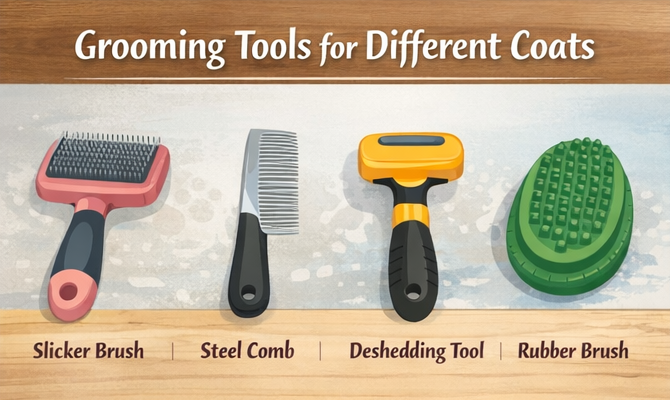
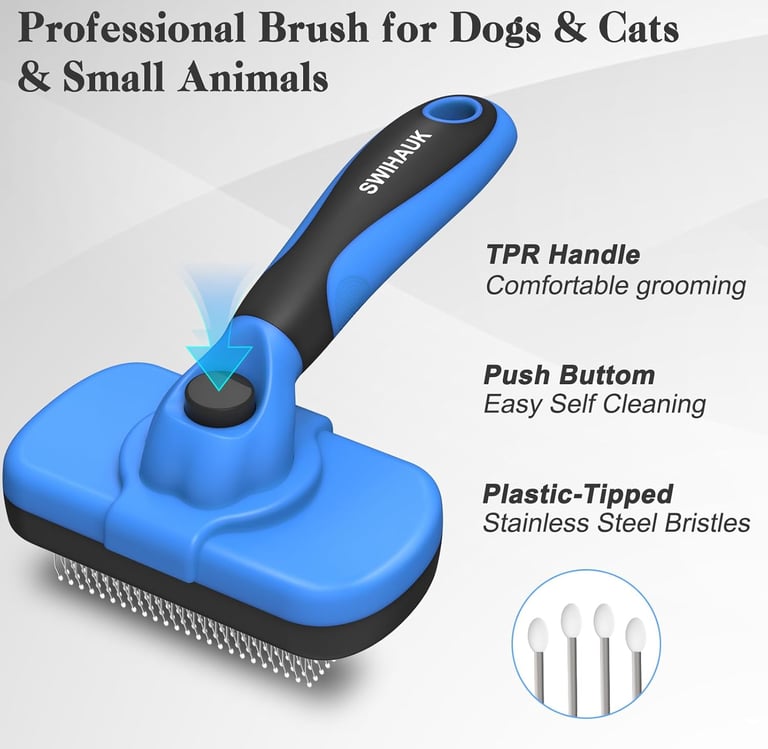
Slicker brushes – great for detangling
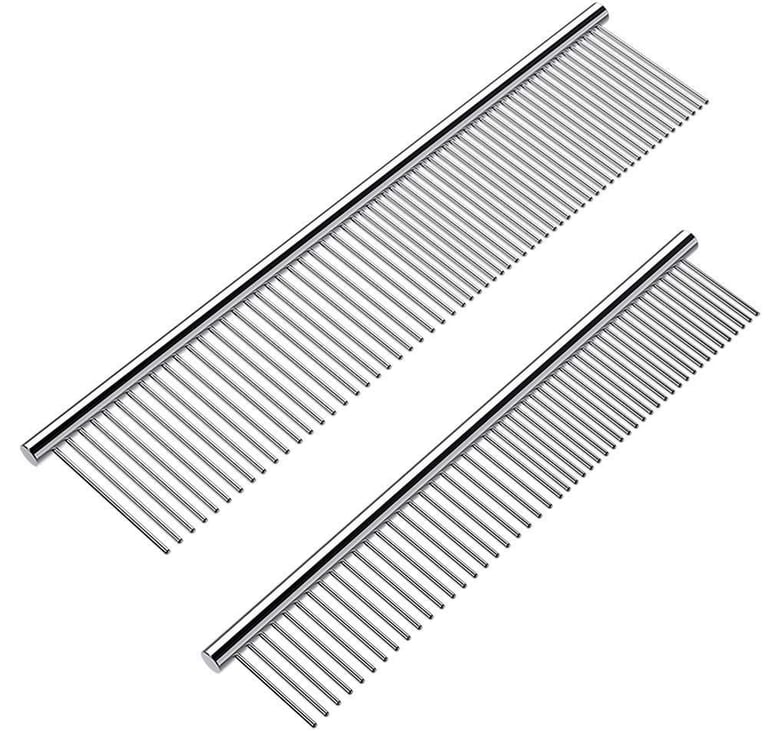
Steel combs – reach deeper layers
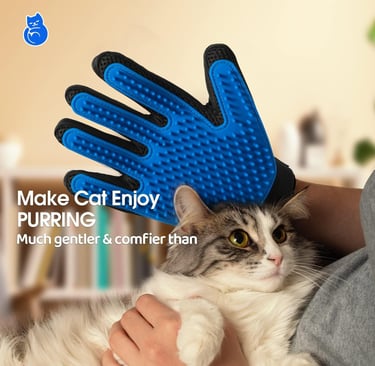
Rubber brushes – ideal for short coats
Deshedding tools – useful during seasonal shedding
This slicker brush has worked great for both my short haired and long haired cat
I use this steel comb brush specifically for long hair and it helps to get deeper as long as your cat is comfortable with it
This rubber brush glove makes it so much easier to groom your cat. Perfect if your cat has some aversion to being brushed.
Let your cat’s response guide you. If they lean into the brush, you’ve found a winner.
What a Healthy Coat Should Look Like
A well-maintained coat is typically:
Smooth
Shiny (not greasy)
Free of flakes
Without bald patches
Dullness, excessive shedding, or sudden texture changes can sometimes signal stress, illness, or nutritional imbalance.
If something looks noticeably different, trust your instincts and consult your veterinarian.
Nutrition Plays a Bigger Role Than You Think
You truly can see diet reflected in the coat.
Cats require high-quality protein and essential fatty acids to maintain skin elasticity and fur strength. Poor nutrition often shows up as dryness or brittleness.
Many owners notice a visible difference within weeks after upgrading to a higher-quality diet. Royal Canin makes an amazing dry food for coat and skin.
Common Coat Care Mistakes
Even attentive owners sometimes fall into these traps:
Waiting Until Mats Appear
Prevention is dramatically easier than removal.
Brushing Only the Top Layer
Hidden tangles often form close to the skin.
Grooming Too Aggressively
If your cat becomes irritated, shorten sessions.
Ignoring Behavioral Changes
A cat that suddenly stops self-grooming may be signaling discomfort or illness.
When to Consider a Professional Groomer
Some situations benefit from expert help:
Severe matting
Extremely thick coats
Cats who panic during grooming
Mobility-limited senior cats
Professional groomers can safely handle difficult coat conditions without causing unnecessary stress.
Seasonal Coat Changes
Many cats grow thicker coats in winter and shed as temperatures rise.
During these transitions, you may feel like fur is multiplying overnight — but this is normal. Increasing brushing frequency during shedding season can dramatically reduce loose hair around your home.
A lint roller becomes less of a lifestyle when grooming becomes proactive.
The Emotional Side of Coat Care
Here’s something experienced cat owners often discover: grooming is less about maintenance and more about connection.
Those quiet brushing moments can become part of your shared rhythm — a pause in the day where your cat relaxes and trusts your care.
Over time, it stops feeling like a task and starts feeling like a ritual.
Final Thoughts
Understanding your cat’s coat type is one of the simplest ways to improve their comfort and long-term wellbeing. With the right tools, a consistent routine, and a bit of patience, grooming becomes far easier than most new owners expect.
At its core, coat care is about paying attention — noticing small changes, preventing problems early, and giving your cat the kind of thoughtful care that helps them thrive.
Because when a cat’s coat is healthy, it usually means the cat is too.