Why Some Cats Stop Self-Grooming
GROOMING
Feline Insight
2/7/20265 min read
Cats are famous for their grooming habits. Spend a few minutes watching almost any healthy cat and you’ll likely see them meticulously licking their paws, smoothing their fur, or carefully cleaning between their toes. Grooming is not just about staying clean — it’s deeply wired into feline biology.
So when a cat suddenly stops grooming, it rarely happens without a reason.
If your once fastidious companion begins to look unkempt, greasy, or matted, it’s often one of the earliest visible signs that something has changed beneath the surface. Sometimes the cause is simple. Other times, it may signal discomfort, stress, or an underlying medical issue.
Understanding why cats stop grooming can help you step in early — and potentially prevent much larger problems.
First, What’s Normal?
Most cats spend 30–50% of their waking hours grooming. This behavior helps them:
Remove loose fur and debris
Distribute natural skin oils
Regulate body temperature
Reduce scent (an instinct rooted in hunting)
Promote relaxation
Grooming even releases endorphins, which is why many cats appear calm afterward.
Because grooming is so habitual, changes tend to stand out quickly — especially if you know your cat well.
I noticed this with my own cat years ago. He was always immaculately clean, almost polished-looking. Then one week his coat started appearing slightly clumpy along his lower back. At first, I assumed he’d gotten into something sticky. But when I realized he hadn’t been grooming that area at all, I knew something was off.
It turned out to be minor joint stiffness — but catching it early made all the difference.
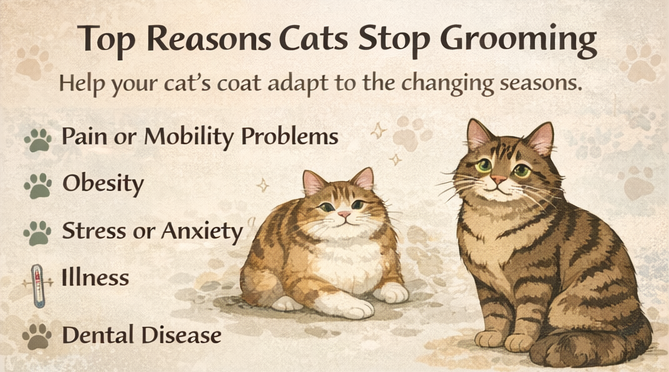
The Most Common Reasons Cats Stop Grooming
There is no single explanation, but most causes fall into a few core categories.
1. Pain or Mobility Issues
One of the leading reasons cats reduce grooming is simple: it hurts.
Conditions that can interfere with grooming include:
Arthritis
Joint inflammation
Injuries
Muscle strain
Dental pain (yes — even mouth discomfort can reduce grooming)
Cats rely on flexibility to reach difficult areas like their spine, hips, and tail base. When movement becomes uncomfortable, those spots are often the first to be neglected.
Signs pain may be involved:
Mats along the back or hindquarters
Hesitation when jumping
Sleeping more than usual
Subtle personality changes
Because cats instinctively hide discomfort, coat condition can become an early diagnostic clue.
2. Obesity Can Physically Prevent Grooming
Weight gain doesn’t just affect health — it affects reach.
Overweight cats may struggle to twist their bodies enough to clean themselves properly. The result is often:
Greasy fur
Dandruff buildup
Matting
Stronger body odor
Many owners don’t immediately connect grooming changes with weight, but veterinarians frequently see the correlation.
The encouraging part? Even modest weight loss can restore mobility and grooming ability.
3. Stress and Emotional Changes
Cats are creatures of predictability. When their environment shifts, grooming habits sometimes shift too.
Common stress triggers include:
Moving homes
New pets
New family members
Loud renovations
Schedule disruptions
Interestingly, stress can push grooming in two opposite directions:
Some cats groom less.
Others overgroom, sometimes to the point of hair loss.
Both responses deserve attention.
I once helped a friend troubleshoot her cat’s suddenly messy coat. The culprit? A new puppy. Once the home settled into a routine and the cat had safe, quiet spaces again, her grooming gradually returned to normal.
4. Illness or Underlying Medical Conditions
When cats feel unwell, grooming often drops on their priority list.
Possible medical contributors include:
Infections
Gastrointestinal illness
Chronic disease
Fever
Hormonal disorders
Think about how you behave when sick — basic self-care becomes less urgent. Cats are no different.
If reduced grooming appears alongside appetite changes, lethargy, or hiding behavior, it’s wise to consult your veterinarian promptly.
5. Dental Problems (Often Overlooked)
This one surprises many owners.
Inflamed gums, broken teeth, or oral infections can make grooming uncomfortable because the tongue and mouth are central to the process.
Watch for:
Drooling
Pawing at the mouth
Bad breath
Food avoidance
A cat doesn’t have to stop eating entirely for dental pain to exist. Check out our oral health preventative care guide HERE
6. Aging and Cognitive Changes
Senior cats sometimes groom less simply because grooming becomes more tiring.
Older cats may experience:
Reduced flexibility
Lower energy
Cognitive decline
This doesn’t mean grooming should stop altogether — but it often means they’ll need more assistance from you.
Helping an aging cat stay clean is one of the kindest ways to support their comfort.
What Happens If Grooming Stops?
Neglected coats can quickly snowball into bigger issues.
Without regular grooming:
Mats pull painfully on skin
Dirt accumulates
Skin infections become more likely
Parasites are harder to detect
Body temperature regulation suffers
Long-haired cats are particularly vulnerable because tangles can tighten rapidly.
Prevention is always easier than correction.
How You Can Help
If your cat isn’t grooming normally, step in gently.
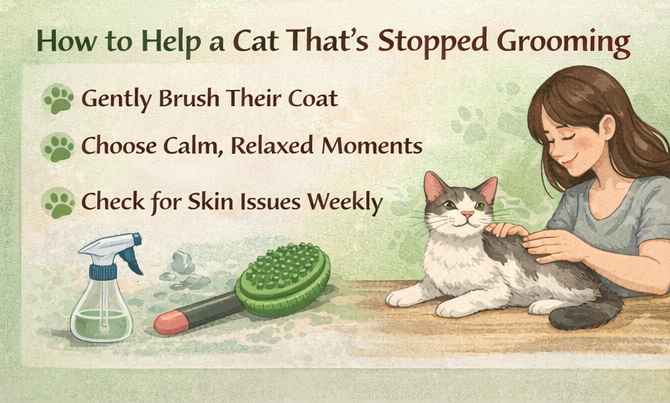
Start With Brushing
Regular brushing can:
Remove loose fur
Prevent tangles
Stimulate skin oils
Improve circulation
Even short sessions make a difference.
Focus on Comfort
Choose moments when your cat is relaxed — perhaps after a meal or during a quiet evening.
Never force grooming. Positive experiences build cooperation.
Check the Coat Weekly
Make it a habit to scan for:
Lumps
Bald spots
Irritation
Fleas
Mats
Early detection is powerful.
When to Call the Vet
Don’t panic at the first messy hair day — but don’t ignore persistent changes either.
Seek professional guidance if you notice:
Sudden coat deterioration
Rapid matting
Behavioral withdrawal
Appetite changes
Signs of pain
Your intuition matters. Owners often sense when something isn’t quite right long before symptoms escalate.
A Small Shift That Can Reveal Big Clues
Here’s something experienced cat owners learn over time:
The coat is like a mirror.
Shiny, smooth fur often reflects internal wellness.
Neglected fur frequently signals the opposite.
Paying attention to grooming habits is one of the simplest ways to monitor your cat’s health without any equipment at all.
The Emotional Side of Stepping In
Helping a cat who has stopped grooming isn’t just practical — it’s deeply relational.
There’s a quiet trust involved when a cat allows you to brush the areas they can’t reach anymore. Those moments are less about maintenance and more about care in its purest form.
I’ve known owners who initially viewed brushing as a chore, only to later describe it as one of the most calming parts of their day — a few uninterrupted minutes of connection.
Final Thoughts
When a cat stops self-grooming, it is rarely random. More often, it’s communication.
It may be saying:
“Something hurts.”
“I’m stressed.”
“I don’t feel like myself.”
By noticing these changes early, you give your cat the best chance at staying comfortable, healthy, and supported.
So the next time you run your hand along your cat’s coat, take a second to really notice it. That simple observation can tell you far more than you might expect — and sometimes, it’s the first step toward helping your feline friend feel like themselves again.