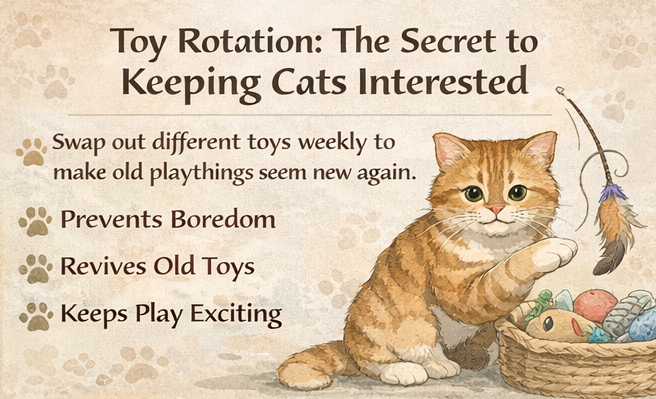
Toy Rotation: The Secret to Keeping Cats Interested
TOYS & ENRICHMENT
Feline Insight
2/5/20266 min read
If you’ve ever bought your cat a brand-new toy only to watch them ignore it within a week, you’re not alone. Many cat owners assume their pet is picky, lazy, or simply “not playful.” But in reality, the issue often isn’t the toy — it’s familiarity.
Cats are biologically wired to notice novelty. In the wild, a hunting opportunity rarely repeats itself in the exact same way. Prey behaves unpredictably, environments change, and stimulation is constant. When our indoor cats see the same toys lying in the same spots every single day, those objects quickly fade into the background.
This is where toy rotation becomes incredibly powerful. It’s one of the simplest, most overlooked strategies for keeping your cat mentally stimulated without constantly spending money on new products.
And the best part? Most cats respond almost immediately.
Why Cats Get Bored Faster Than You Think
Cats may sleep a lot, but when they’re awake, their brains are built for activity. Stalking, chasing, pouncing, analyzing — these behaviors aren’t optional instincts. They’re neurological needs.
When stimulation drops, you might notice subtle changes:
Less spontaneous play
Increased sleeping
Attention-seeking behavior
Knocking items off counters
Nighttime zoomies
Overeating
Even mild aggression
Often, what looks like “bad behavior” is simply a bored predator trying to create excitement.
I remember leaving a pile of toys out for one of my cats, convinced I was giving him variety. Within days, he stopped touching nearly all of them. Then one afternoon while cleaning, I picked up a feather wand he hadn’t seen in weeks and casually dragged it across the floor.
He froze.
Eyes wide. Body low. Tail twitching.
It was as if I’d introduced a completely new object.
That moment perfectly illustrates the psychology behind toy rotation.
The Science Behind Novelty
Animals — including cats — experience a phenomenon called habituation. When a stimulus appears repeatedly without consequence, the brain stops prioritizing it.
In simple terms:
New = important
Familiar = ignorable
Toy rotation resets that importance.
By temporarily removing toys from your cat’s environment and reintroducing them later, you reactivate their curiosity and hunting drive.
Some feline behavior specialists even compare rotated toys to new prey entering the territory.
What Exactly Is Toy Rotation?
Toy rotation is the practice of offering only a small selection of toys at one time while storing the rest out of sight. Every week or two, you swap them.
Instead of having ten toys scattered across the floor indefinitely, your cat might only see three or four at once.
When the hidden toys return, they feel fresh again.
Think of it like rediscovering a favorite jacket you forgot you owned — suddenly it feels exciting.
Signs Your Cat Would Benefit From Toy Rotation
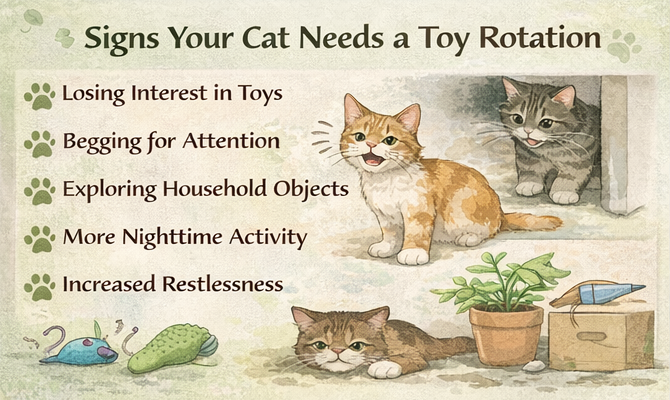
Not every cat shows boredom the same way, but some common indicators include:
Ignoring toys they once loved
Playing briefly, then walking away
Begging for attention more often
Increased nighttime activity
Fixating on household objects instead
Even highly playful cats can burn out when stimulation becomes predictable.
Indoor cats, in particular, rely on us to create variety.
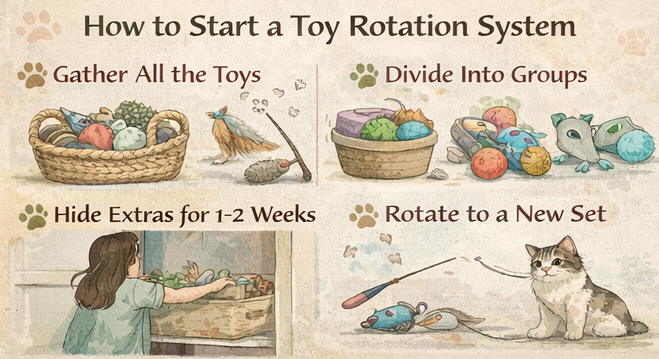
How to Start a Toy Rotation System
The good news is that you probably already own enough toys to begin.
Step 1: Gather Everything
Collect every toy hiding under furniture, inside baskets, or tucked into drawers. Most owners are surprised by how many they actually have.
Step 2: Divide Into Groups
Create two or three sets with different play styles:
Variety keeps multiple hunting behaviors engaged.
Step 3: Hide the Extras
Place unused toys somewhere your cat cannot see or access them. Visibility alone can reduce novelty.
Step 4: Rotate Every 1–2 Weeks
There’s no universal schedule — some cats prefer weekly changes, while others stay interested longer.
Let your cat’s enthusiasm guide you.
A Mistake Many Owners Make
Rotation doesn’t mean dumping a fresh pile onto the floor and hoping for the best.
Presentation matters.
Try:
Sliding a toy out from behind a corner
Dragging it slowly across the rug
Mimicking prey movement
Introducing it during your cat’s natural active hours (usually dawn or evening)
You’re not just giving a toy — you’re triggering a hunting sequence.
Quality Over Quantity
It’s tempting to buy more toys when interest fades, but often the better investment is choosing toys that activate your cat’s instincts.
Look for toys that encourage:
Stalking
Chasing
Grabbing
Kicking
Problem-solving
Many cats prefer one fantastic toy over five mediocre ones.
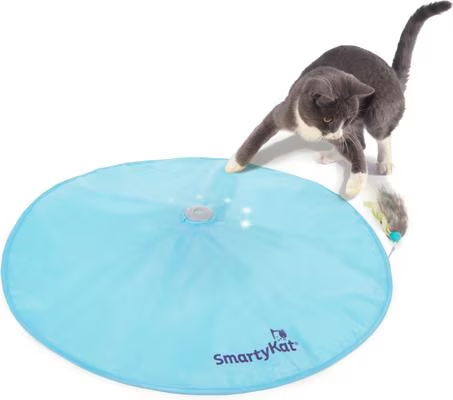
This interactive mouse is perfect for getting your cat to stalk and chase. Super easy to use with its own app.
Interestingly, some of the most beloved toys are also the simplest. I’ve seen cats ignore expensive electronic gadgets in favor of a basic feather wand or even a carefully supervised strip of cardboard.
Don’t underestimate the classics.
Don’t Forget Interactive Play
Rotated toys are most effective when paired with engagement from you.
Independent play is great — but shared play is powerful.
Just 10–15 minutes of active play can:
Reduce stress
Support healthy weight
Improve sleep cycles
Strengthen your bond
After a good play session, many cats groom, eat, and settle down for a deep, satisfied sleep. Behaviorists sometimes refer to this as completing the hunt → catch → eat → relax cycle.
It’s incredibly regulating for them.
Toy Fatigue Is Real — But Preventable
Without rotation, toys become part of the scenery. Cats step over them without a second thought.
With rotation, those same toys regain their magic.
Owners are often shocked by how playful their “lazy” cat suddenly appears.
The truth is, most cats don’t lose their drive to play — they just lose the thrill of discovery.
Special Considerations for Multi-Cat Homes
Toy rotation can be especially helpful if you have more than one cat.
Why?
Because novelty reduces competition. A “new” toy can redirect energy away from tension and toward healthy play.
Consider rotating:
Solo toys for independent play
Group-friendly interactive toys
Puzzle feeders to separate focus
This helps ensure each cat stays mentally engaged.
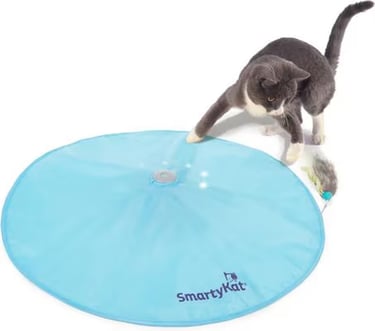
I have had a lot of luck with this toy for keeping both my cats engaged at the same time.
How Many Toys Does a Cat Actually Need?
Less than you think.
A well-rotated collection of 8–12 quality toys can keep most cats stimulated for months.
You don’t need a toy explosion — you need strategic variety.
When Rotation Alone Isn’t Enough
If your cat still seems disengaged, consider expanding enrichment beyond toys:
Mental stimulation is cumulative. The more outlets your cat has, the more balanced they tend to feel.
The Hidden Benefit: You Save Money
Here’s something many owners discover quickly — once you start rotating toys, the urge to constantly buy new ones drops dramatically.
Instead of chasing novelty at the pet store, you create it at home.
Your cat stays happier, and your wallet stays fuller.
That’s a rare win-win.
Final Thoughts: Small Change, Big Impact
Toy rotation isn’t complicated. It doesn’t require expensive equipment or elaborate planning.
But its effect can be surprisingly profound.
A curious cat is often a confident cat.
A stimulated cat is often a calmer cat.
An engaged cat is often a healthier cat.
So the next time you see a forgotten toy under the couch, don’t assume your cat has outgrown it.
Put it away for a couple of weeks.
Then bring it back — slowly, enticingly — and watch those ears perk forward again.
You might just rediscover your cat’s inner hunter.